
You have a chipped front tooth, a small gap, or a stain that whitening never quite fixed, and you keep landing on the same two options. Dental veneers promise a polished, long-lasting result. Dental bonding promises a faster, more affordable fix. Both can give you a smile you feel good about, which is exactly what makes the choice hard. The veneers vs bonding question rarely has a single right answer, because the better treatment depends on your teeth, your goals, and how long you want the result to last. At Butler Family Dental, we help patients across Eugene and Springfield weigh these two paths every week, and the decision usually becomes clear once you understand what each one is built to do.
This post walks through how to choose between the two, when each tends to be the stronger option, and how the materials actually compare over time. You can also explore the details of each treatment on our dental veneers and dental bonding pages.
What Veneers and Bonding Have in Common
Veneers and bonding are both cosmetic treatments that improve the front-facing surface of your teeth, and they solve a lot of the same problems. Chips, gaps, mild crookedness, uneven shape, and stubborn discoloration can all be addressed by either approach. Both are color-matched to blend in with the teeth around them, and both can dramatically change how your smile looks.
The difference is in the material and the method. Bonding uses a tooth-colored composite resin that your dentist sculpts directly onto the tooth in a single visit. Veneers are thin, custom-made porcelain shells crafted in a lab and bonded permanently to the front of the tooth. That one distinction, resin shaped in your mouth versus porcelain built to order, drives almost every other difference that matters when you are choosing between them.
How to Decide Between Veneers and Bonding
The right pick usually comes down to a few honest questions. How many teeth are you hoping to change? Are you after a quick refresh or a long-term smile makeover? How much does it matter that the result resists staining for years? And how do you feel about permanently altering the tooth underneath? Your answers tend to tip the scale toward one option, and the next two sections show where each one wins.
When Dental Bonding Is Usually the Better Choice
Bonding is often the smarter starting point when the changes you want are small and specific. It is the most conservative cosmetic option we offer, which makes it a low-pressure way to improve a tooth or two.
Bonding tends to be the better fit when:
- You want to repair one chipped or cracked tooth rather than overhaul your whole smile
- You are closing a small gap or smoothing a slightly uneven edge
- You prefer a lower upfront cost for a minor cosmetic change
- You want a reversible option that keeps your natural enamel intact
- You would like the result finished in one appointment
It also leaves your options open for later, and many people use bonding to try out a change before committing to anything more permanent.
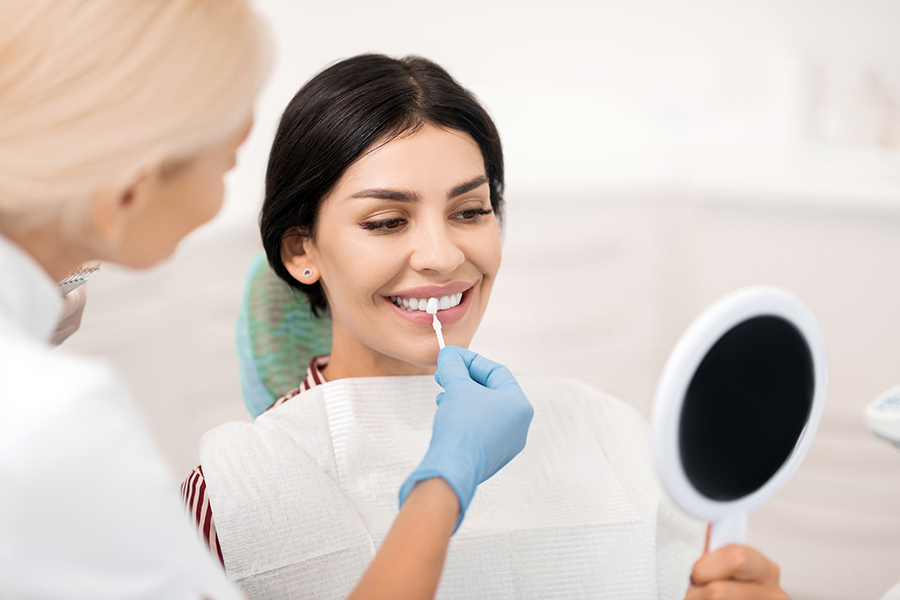
When Porcelain Veneers Are Usually the Better Choice
Veneers earn their place when you want a bigger transformation that holds its look for years. A matched set can bring uniformity to a full smile in a way that tooth-by-tooth bonding cannot always match.
Veneers tend to be the better fit when:
- You are reshaping several front teeth or planning a full smile makeover rather than a single repair
- You have deep stains that professional whitening has not been able to lift
- You want the most durable, stain-resistant result available
- You want a finish that closely mimics the translucency of natural enamel
Veneers do require removing a thin layer of enamel, and that step is permanent, so they are best for patients who are confident in the change they want and ready to commit to it.
Veneers vs Bonding, Side by Side
When you line up dental bonding vs veneers across the factors patients ask about most, the tradeoffs get easier to see.
Durability and lifespan are where porcelain pulls ahead. According to Cleveland Clinic, dental veneers typically last 10 to 15 years with proper care, while bonded teeth usually need a touch-up or replacement somewhere in the range of every three to 10 years. Stain resistance follows a similar pattern. Porcelain has a smooth, glass-like surface that resists discoloration well, while composite resin is more porous and can pick up stains from coffee, tea, and red wine over time.
Tooth preservation and reversibility tip the other way. Cleveland Clinic notes that dental bonding often requires little or no enamel removal, which makes it reversible, while most veneers are not reversible because a thin layer of enamel is removed to make room for the shell. Cost works on different timelines too. Bonding asks less of you upfront, while veneers are a larger initial investment that can deliver a comparable cost-per-year because the result lasts longer. We review the specific factors that shape your cost during an exam, since the right number depends on how many teeth are involved and the condition of each one.
Can You Combine Veneers and Bonding?
Not always. Some patients combine both treatments across different teeth, using veneers on the most visible teeth and bonding to refine a neighbor that needs only a minor adjustment. Others start with bonding for an immediate, affordable improvement and move toward veneers later when they are ready for a longer-term result. Because bonding can be adjusted or removed later, it pairs well with a phased plan. The goal is a smile that looks balanced and natural, and sometimes the best route blends both approaches instead of picking just one.
How We Help Eugene Patients Decide
The honest truth is that you do not have to settle the veneers vs bonding question on your own. A cosmetic exam answers most of it quickly, because the condition of your enamel, the number of teeth involved, and your smile goals usually make one path the clear front-runner. Butler Family Dental has served Eugene and Springfield patients since 2014, and our team takes time to walk through your cosmetic dentistry options, explain the tradeoffs in plain language, and recommend what genuinely fits, not the most involved option. We listen first and suggest treatment second, so you always understand why we point you toward a particular choice.
Frequently Asked Questions About Veneers and Bonding
Should I whiten my teeth before bonding or veneers?
If teeth whitening is part of your plan, it is best to do it first. Neither composite resin nor porcelain responds to whitening treatments, so your dentist matches the new material to the shade of your teeth at the time of placement. Whitening afterward would leave your natural teeth brighter than the restoration, so sequencing the whitening first gives you the most even result.
Are veneers or bonding painful to get?
Most patients are surprised by how comfortable both procedures are. Bonding usually requires no anesthesia at all, since little or no natural tooth is removed. Veneers involve removing a thin layer of enamel, and we numb the area first so the preparation stays comfortable. Mild sensitivity afterward is possible with veneers and typically settles within a few days.
Can bonding or veneers still get cavities?
Yes, and this is worth understanding. Neither treatment makes the underlying tooth immune to decay. The natural tooth structure beneath a veneer or bond can still develop cavities if plaque builds up along the gumline, which is why daily brushing, flossing, and routine checkups matter just as much after cosmetic work as before. Caring for a restored tooth is otherwise the same as caring for a natural one.
Are composite veneers the same as dental bonding?
Not quite, though they are closely related. Composite veneers use the same tooth-colored resin as dental bonding, but the material covers the whole front of the tooth, not just one built-up area. Porcelain veneers, by contrast, are lab-made shells. Composite veneers tend to sit in the middle on both cost and longevity, which is why some patients think of them as a step between simple bonding and porcelain veneers. We can explain where each option fits your goals during your visit.
Schedule a Cosmetic Consultation at Butler Family Dental in Eugene
Choosing between veneers and bonding feels easier once you see your own teeth in the picture instead of a generic comparison. Sometimes the smaller, reversible fix is exactly right, and sometimes a longer-lasting set of veneers is the better investment. According to the Centers for Disease Control and Prevention, consistent dental care supports both your oral health and your overall health, and a cosmetic consultation is a natural time to look at the whole picture.
We welcome patients throughout Eugene, Springfield, and the surrounding Lane County area. Whether bonding, veneers, or a combination of the two turns out to be your best fit, our team will help you decide with clear, honest information.
📞 Call or text (541) 485-6645 to schedule your consultation.
Ready to move forward with a smile you are proud of? Contact Butler Family Dental today to schedule your appointment and find out whether veneers or bonding is the right choice for you.